
Moving Hostage Target Drill: Tracking, Ambush and Distance
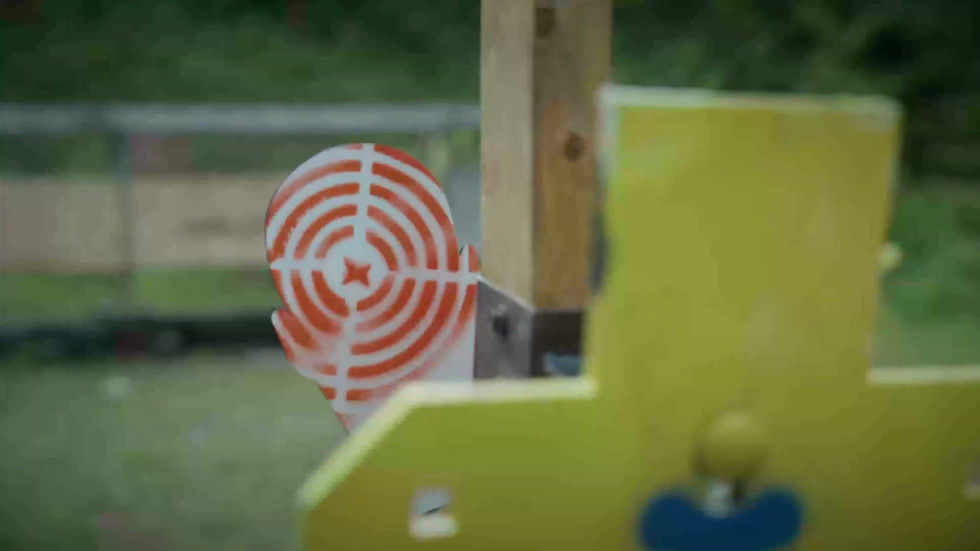
A hostage rescue target riding an X1 Pro cable carriage gives a shooter two things that move at once: the plate crosses the range, and the head moves behind the plate on its own. Hitting the head at 100 m with a 2 MOA red dot and no magnification proved too hard for three shooters in a row. The fix was distance, a kneeling position and a raised heart rate rather than a different target. The scoring rule was simple: shoot until you hit the head, and a hit on the plate ends your run.
Watch: Can They Hit The Moving Target? Insane Shooting Challenge (9:53) on YouTube. The setup, the three runs at 100 m, the argument over who hit what, and the second course.
The setup
The X1 Pro is rated to move 20 lb of steel. This run carried a 21.5 lb plate with the hostage rescue target mounted behind it, so the carriage was over its rating and everything in the setup had to be right for it to run. It did. Keep to the rating on your own range; this was a one-day test with the crew on hand.

Two methods, and why this target needs both
Tracking: swing the sights with the target and break the shot during the swing, as if it were a normal shot.
Ambush: hold the sights on a point the target has to cross and break the shot as it arrives.
On this target you track the plate as it moves across, and ambush the head as it pops into the position you want. One skill on its own does not get the hit.
Scoring
Count the shots it takes to hit the head. A hit on the plate is a hit on the hostage and the run is over. Any shot that lands on the wooden frame does not count either way. After each run the target comes back to the bench, because from 100 m nobody could agree on what had been hit, and the head told a different story from the shooters.

What happened at 100 m
Red dot, no magnification, both the plate and the head moving. Three shooters, three runs, and the honest result was that every one of them hit the plate and there was a dispute over one head hit near the ear. Frangible ammunition kept the splash down. It was too hard to be a drill: a course that nobody can pass teaches nothing about who is improving.

The second course
Bring the shooter closer. The exact distance depends on the optic and the shooter; 100 m with a 2 MOA dot was the wrong side of it.
Add a position. Kneeling took away the table and made breathing part of the shot.
Add a physical load first so the heart rate is up when the target moves.
Keep the scoring rule: shots to a head hit, plate hit ends the run.
Every shooter got a hit on the second course. The consensus afterwards was that a 1 to 8 power optic would have changed the 100 m result, and that a 2 MOA dot is a close-range sight for a target this small and this mobile.
What it looks like when it is easy
At demos for tactical teams the same drill looks straightforward, because the people running it are that much better than the average shooter. That is the point of a moving hostage target: it separates the shooters who have the skill from the ones who only have the qualification score.
The head and plate ride the X1 Pro (AR500) carriage; the head unit is the Hostage Rescue Target. Its setup on a post is in Hostage Rescue Target Setup: From the Box to First Shots.


Comments