
Heated Steel Through a Thermal Optic: 100 m to 600 m, Measured
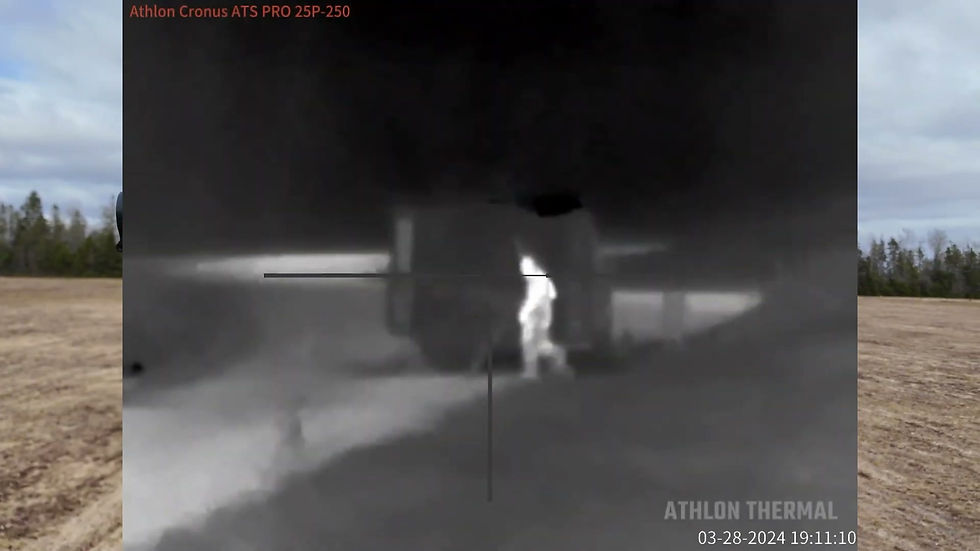
A 66 percent IPSC plate with the heating element on its back was warmed from 13 C on a cold morning, then viewed through a handheld thermal optic from 100 m, 300 m, 400 m and 600 m. At 100 m it glowed like the person standing next to it. At 300 m the plate was easier to see than the person. At 400 m it was a small bright dot that digital zoom turned into an obvious target. At 600 m it was a speck, and the way to find it was to hold the optic so the plate sat against the sky rather than the ground.
Watch: Heated Steel Target Glows at 600m on Thermal (8:54) on YouTube. The redesign story, the warm-up readings, and the walk back down the range with the optic.
Why the launch was pushed back
The product was three weeks past its launch date when this was filmed. The unboxing and how-it-works videos were already recorded for the first design. Conversations with people who run thermal courses for a living said the same thing: to beat what they were already using, the target had to get much hotter and run much longer. The first design was scrapped for a far larger battery and an element that takes the plate to 100 C. The videos were scrapped with it.

The warm-up
Plate at the start: 13.2 C, cold enough to vanish against the ground in the optic.
Power at 100 watts, the top setting, which is roughly the heat a resting person gives off.
Within seconds the plate read 18 C; before the walk downrange it was past 30 C and climbing.
Through the optic the first thing to show is the square footprint of the element, then the heat spreads across the rest of the plate.


What each distance looked like
100 m: the plate and the person loading the van beside it both glow. The van itself was invisible.
300 m: the plate is the clearer of the two; the person is harder to pick out.
400 m: a small, bright dot. The rocks below the target line had soaked up sun and showed too. Digital zoom on the optic made the plate unmistakable.
600 m: a speck. Holding the optic so the plate sits above the skyline makes it far easier to find than looking for it against the ground.


What decides how far it shows
The size of the steel. A 66 percent IPSC is a small plate to be looking for at 600 m; a full-size silhouette carries more heated area and shows further. The target in this video was deliberately the small one.
Two things learned the hard way
Manage the wire. The first day of testing the earlier version, the element's lead was shot because it was left hanging. Tie it up behind the post.
Never switch the element on without steel against it. It needs the plate as a heat sink or it will catch fire. That warning now ships in every box.
The production unit that came out of this test is on the Thermal Optic Targets page. How to fit it to your own plate is in Fitting the Thermal Heating Kit to Your Own Steel Target.


Comments